


For us, 2025 was a year to face the ways in which the world is rapidly changing—in which we are rapidly changing—and to decide, as we prepare to graduate next year and commence new lives in this brave new world, in which direction we want to go: with, and against, which currents we want to swim.
We had thought, initially (and not very originally), to write a series of predictions for 2026 as a way of reflecting on, and making sense of, the events of this past year. But as we disagreed with our own arguments at every turn, we concluded that predictions were too rigid, too wrong a constraint for a world that feels increasingly like, to quote Joan Didion, “a hologram that dematerializes as [we] drive through it.”
Indeed, in the closing segment of Jimmy Fallon’s recent interview with Sam Altman, when asked for his prediction for “the biggest thing [he sees] happening out of ChatGPT in the next five years,” Altman says, apparently caught off guard by what seems like a reasonable question to ask the CEO of one of the fastest growing AI companies: “Five years is a long time.”

He settled on offering not his expectations, necessarily, but rather his hopes: that next year, the models will make small, but important, new scientific discoveries, and that in five years, the models will cure diseases.
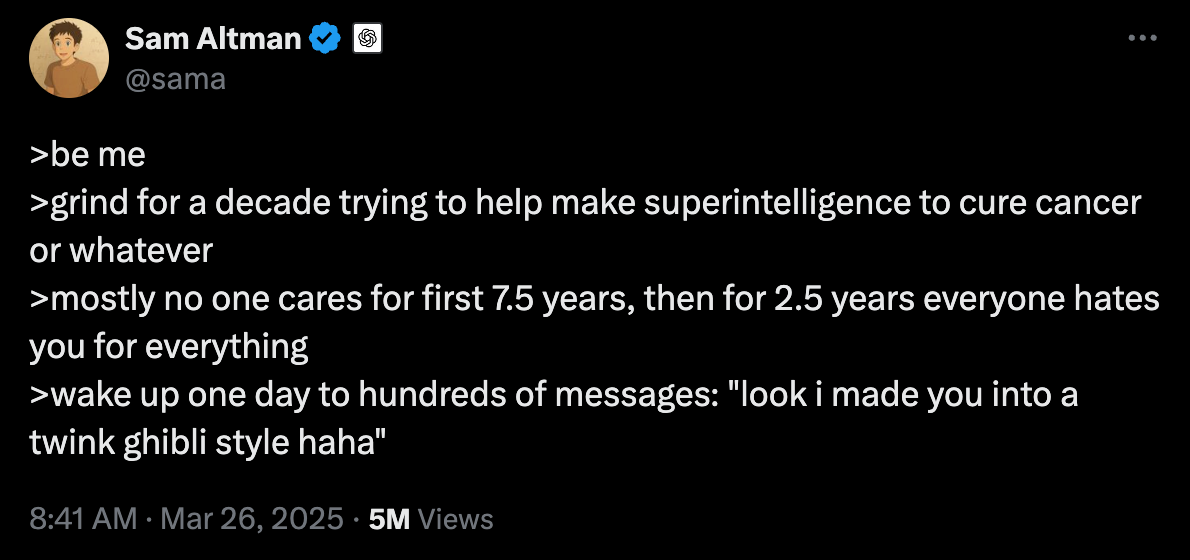
This humanitarian hope—this original hope—is the platonic ideal of OpenAI, subject (as all “well-intentioned” billionaires’ hopes are) to the currents of the world—drifting, drifting, drifting, until finally arriving at a for-profit corporate conversion and the announcement of adult content all within the same week. Hardly anything these days seems able to escape the undertow of enshittification.1
It is easy to feel caught in the riptide, unmoored from today, with no purchase on tomorrow. In the span of a single year, so much seems to have come undone. Justice is increasingly militarized, whether in the descent of the National Guard on cities or in political violence framed as vigilantism. The threats of dehumanization and derealization are a constant, deafening din: diversity is out, xenophobia is in; people are being replaced by bots, falling in love with bots, descending into madness from bots, funding bots, shorting bots, giving bots all that data, all that water.
Reality, once rendered into memes, has become one: the Louvre was robbed in broad daylight, its password for the server controlling its CCTV systems simply “LOUVRE.” Absurdism is just another form of extremism.
While it is critical to confront these undoings—to bear witness to them, to refuse to look away, to take action in response—it is also important to keep hold of joy, of whimsy. Whimsy is the available imagination to think up new worlds. It is our reminder that the inevitable is a self-fulfilling prophecy only if we play along.
Heraclitus reminds us that “it is not possible to step into the same river twice.” Πάντα ῥεῖ: everything flows—the river, yes, but also you. We have agency against the currents acting upon us. So as we thrash about in this choppy, often unforgiving river that will take us into 2026, we invite you to join us in swimming—against some current, with another, towards something.
Here are the currents, and countercurrents, we’re tracking going into 2026. Swim on!
Currents
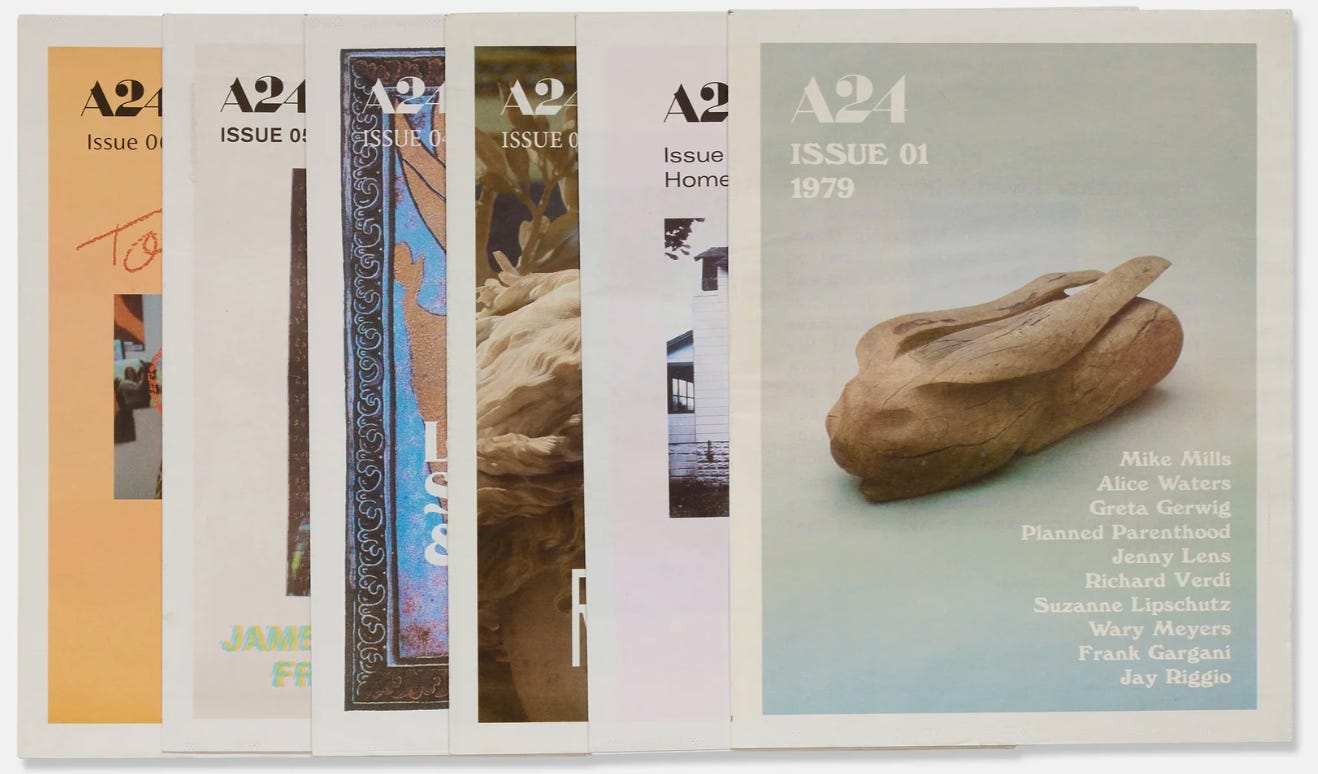
The Indie Industrial Complex. A24 is not an indie production company. We repeat: A24 is not an indie production company. It is an independent production company, but it is also valued at $3.5 billion dollars, backed by the same VC firm invested in Anduril (defense tech), Affirm (buy now, pay later aka predatory lending tech), Fanatics (sports gambling tech), and OpenAI. It has merch for Christ’s sake—zines and tote bags. A24 is the production company equivalent to the performative male.
Even faster fast fashion. TikTok shop launched in late 2023. By 2024, it was the fastest growing online retailer. It’s fast fashion live, we fear, set to the pace of China’s live-commerce machine.
The body as lean, mean machine, emphasis on lean. So, Wicked: For Good came out, along with a deluge of articles about the cast’s collective weight loss as Ariana Grande and Cynthia Erivo in particular (but also Michelle Yeoh) appeared truly emaciated. Meanwhile, there has been an explosion of marketing around GLP-1s (and microdosing GLP-1s), including a controversial Ro ad featuring Serena Williams, one of the greatest female athletes of all time. We have no desire to litigate women’s bodies—that’s done quite enough. But we are troubled by self-optimization culture—including wearables, comprehensive health testing, and the gospel of Bryan Johnson—and its demands.
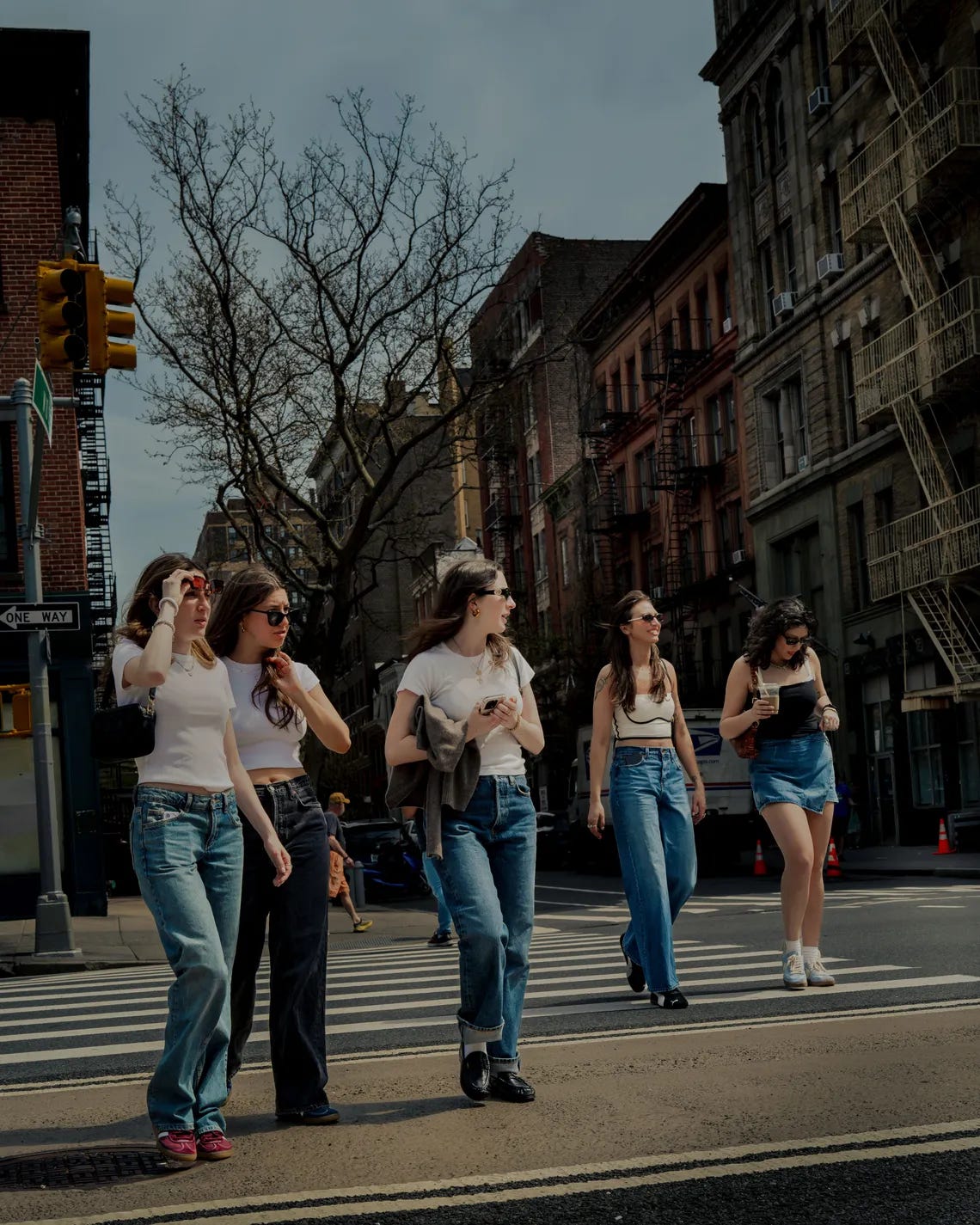
The homogeneity of taste. An article in The Cut this year, titled “It Must Be Nice to Be a West Village Girl,” displays a group of girls, evidently of the West Village variety, crossing the street. They are the image of “cool girls”: none of them is looking at you, and they are all wearing the same uniform—simple white (or, if you really want to get crazy, black) top, medium-to-low-rise blue denim, Adidas Sambas, or black loafers. The uniform is cute. But we are suspect of letting the algorithm be the arbiter of cute rather than letting our own tastes be our guides.
Sippy and sippier water bottles. We get the allure: sippy cups are easier to drink from, and we’re too dehydrated to make hydration any harder. But they’re kind of difficult to keep clean and…gross? And part of the great infantilization of brands?
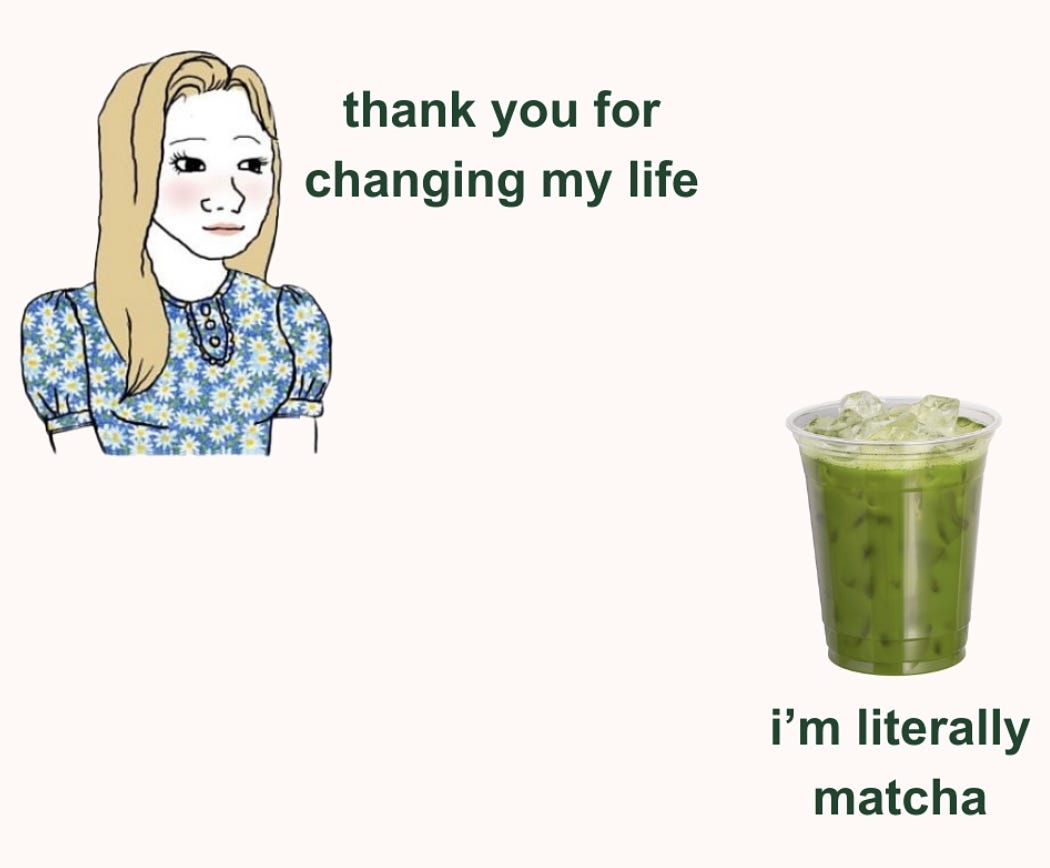
Self-soothing culture. A cute little $8 latte here, a $100 manicure there, the suddenly not-so-small habitual indulgence that doubles as a coping mechanism.
Temporary possession. Renting everything—dresses, houses—and owning nothing. (On this note, we are intrigued by Real Estate Investment Trusts—REITs—as an alternative to the fantasy of home ownership for our generation.)
Retrofuturism. Forward-looking design dressed in vintage aesthetics (see Fallout or this Claude ad).
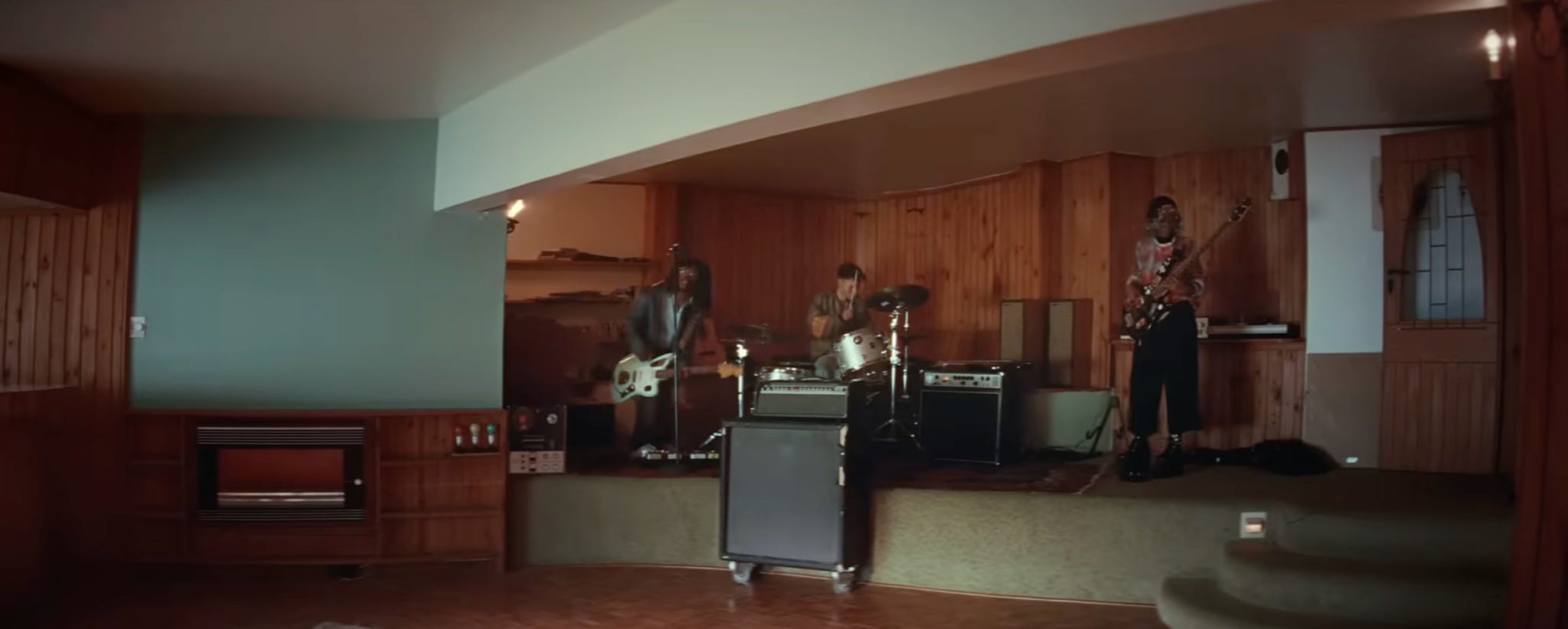
Nonsense. The unspooling of language to word-jumbles that lack semantic meaning, like 6-7; the reliance on meme-speak to capture what is a pretty complex human experience.
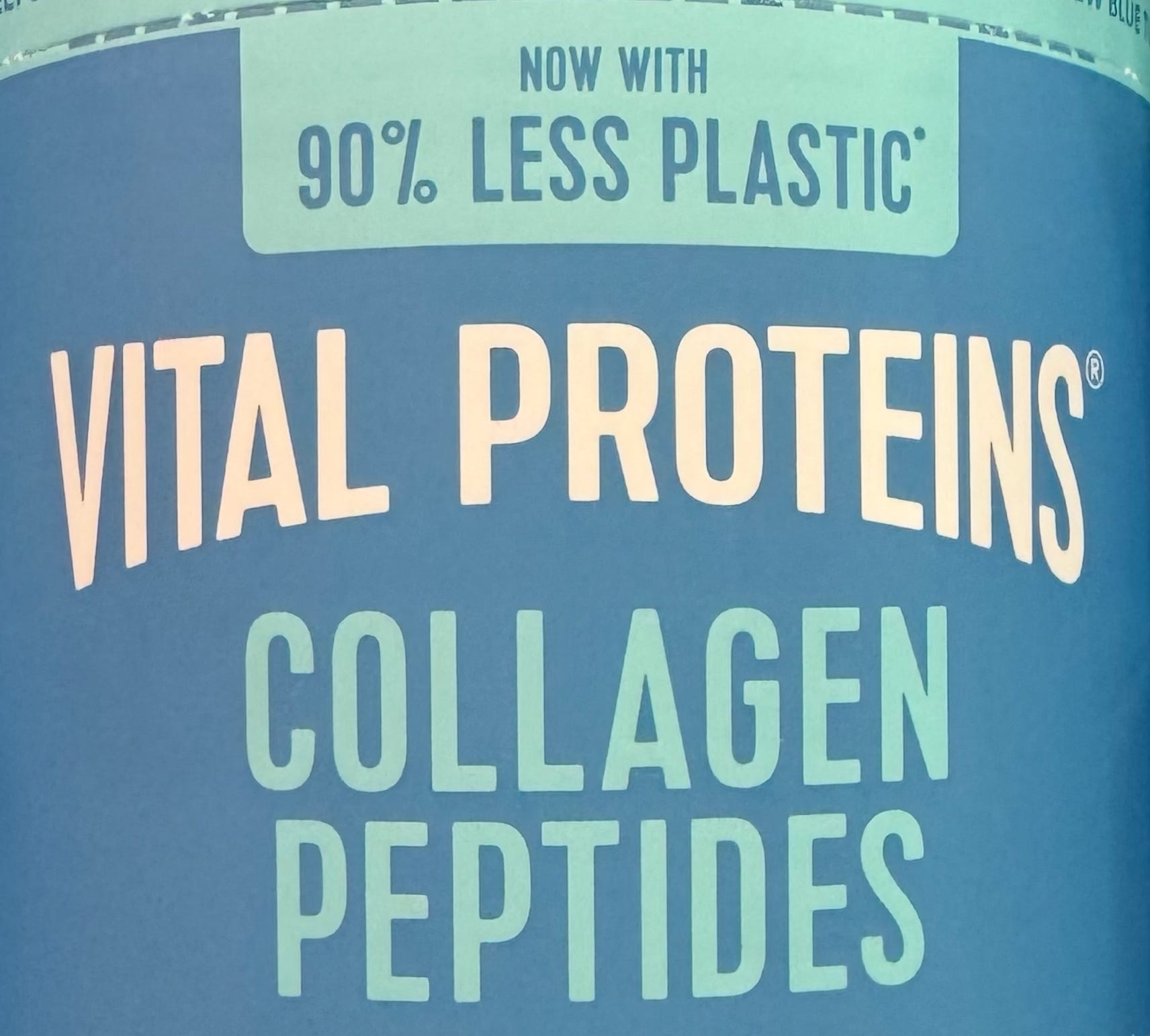
“Non-toxic” and other weird value propositions. Ceramic-coated pans are not an “innovation” (Le Creuset celebrated its 100th year this year), and there’s something unnerving about “non-toxic” as a selling point. For example: the other week, Céline did a double take of a package for Vital Proteins collagen powder that read, ambiguously: “Now with 90% less plastic.” The packaging or…the protein powder? De-influence yourself and keep it simple: stainless steel, cast iron, olive oil, whole foods.
The cult of celebrity. Biopics, memoirs, famous-people-give-advice books. Take it from one of our boyfriends: reading Shoe Dog: A Memoir by the Creator of Nike 1) is an aesthetically unpleasant experience and 2) won’t make you Phil Knight. There are much more interesting, much more transformative things to read and watch out there.
The big education short. There have been about one billion articles published about how AI is devaluing traditional degree programs, including ours (which we wrote about here). Certainly, AI has been a shock to schools, one not yet fully absorbed. But we’re bullish on the resilience of schools to figure it out.
Polarization. Still at record highs and likely to climb further. But a reckoning may be near. Marjorie Taylor Greene’s decisive break from Trump, covered here by the New York Times, may be a harbinger of a greater disillusionment to come.
Countercurrents
Ceremony. Going to the movies, seeing a play. Going by the continuously plummeting box office numbers, we’ve lost all sense of it! Maybe we’re being hyperbolic, but there is something to getting up, getting dressed, going out, indulging in aesthetic pleasure, and being a real person, with other real people, that is good for you. The same logic applies to dining out vs. ordering delivery. Let us not ensnare ourselves in the sarcophagus of frictionless comforts!
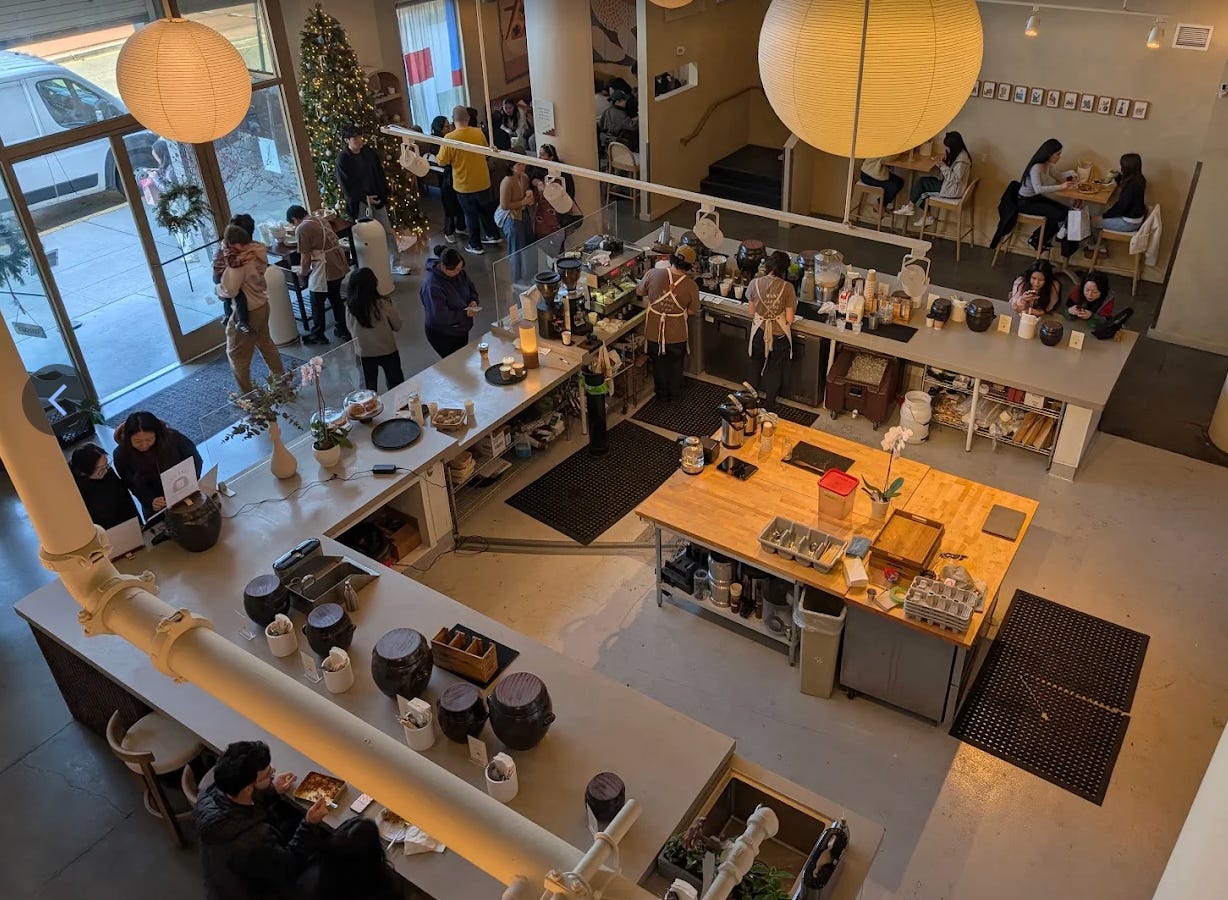
Third places. We need more third places outside of home and work, which, for remote workers, are the same place, creating all the more need for other places. And no, the Metaverse does not count, as much as the Zuck would like you to believe. And if you’re in SF, a city in desperate need of third places, check out SŌHN; one of our friends runs workshops there :)
Buying fewer, nicer things. Trends, gadgets, new things. With the 24/7 worldwide bazaar at our fingertips, every day is Christmas, and Santa’s sleigh is an Amazon delivery truck. Internalize the mantra of “buy it nice or buy it twice.” Or Keats: “A thing of beauty is a joy for ever.” A piece of junk is a false joy for a minute that’s already passed.
Medicine as medicine, and not a fashion statement. GLP-1s are life-changing, potentially life-saving drugs and should be treated, and marketed, as such.
Taking a friend out on a date. You pay, and, no, you don’t send a calendar hold.
Eating a carb for breakfast. Also, just eating breakfast.
Taste as a reflection of our actual tastes?? Liking something because it sparks joy, and we say that unironically!!! Céline’s dad recently bought a painting by a Thai artist called BYBAMBAM. Though a significant departure from his usual tastes, the painting’s representation of dyslexia resonated with him, moved him, compelled him to hang it prominently in his home. That’s taste.
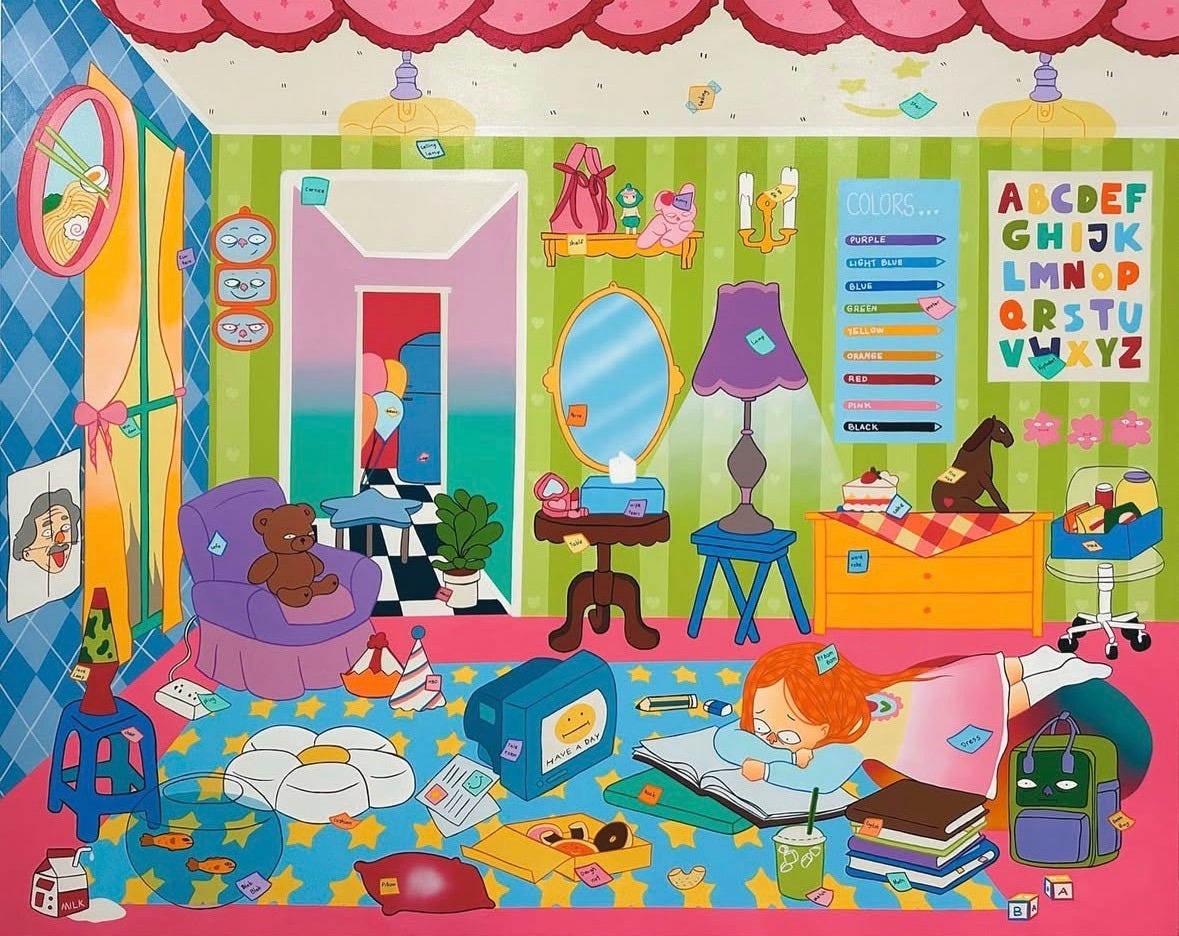
Feeling our feelings, using our words. Watch a movie with a friend where you both cry. Then talk—at length—about why it made you cry. Resist the shorthand of something like “I’m dead.” Rediscover the language for your interiority.
Slowing down, thinking through major life choices on longer time horizons, perhaps over a cup of coffee in an aforementioned third place. We get it, the present feels urgent and the future abstract. But inaction is action, and, day by day, we write our futures. The story need not be neat; the most interesting ones never are. But rather than follow a linear career, follow a truthful one.
Not taking out the phone. What if we didn’t respond to the email immediately, or look up which animal has the highest blood pressure ASAP, just because we can? What if we let our curiosities play out just a few minutes longer?
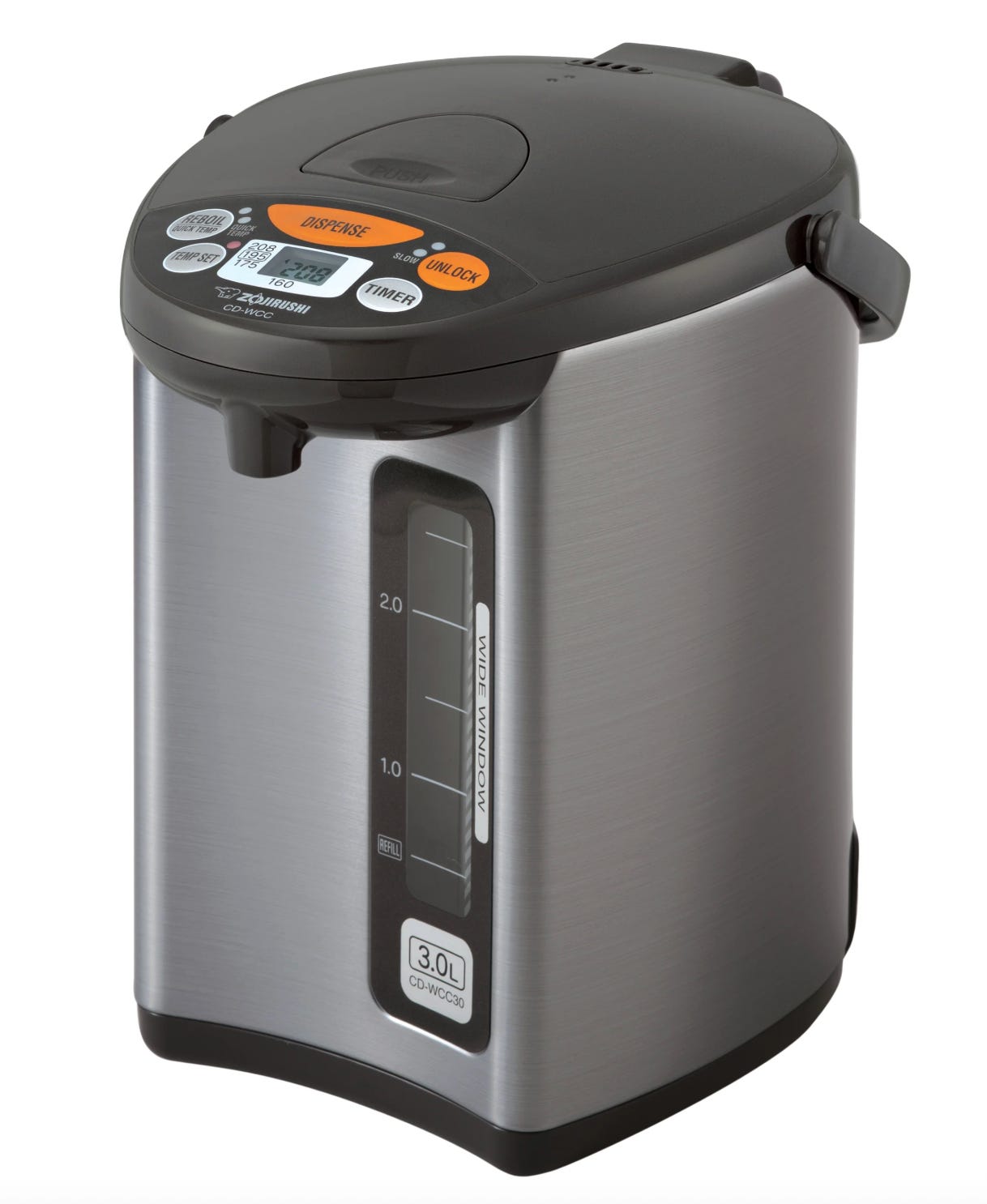
Hot water dispensers like this one. Ask our Chinese grandmothers—it’s good for you!!
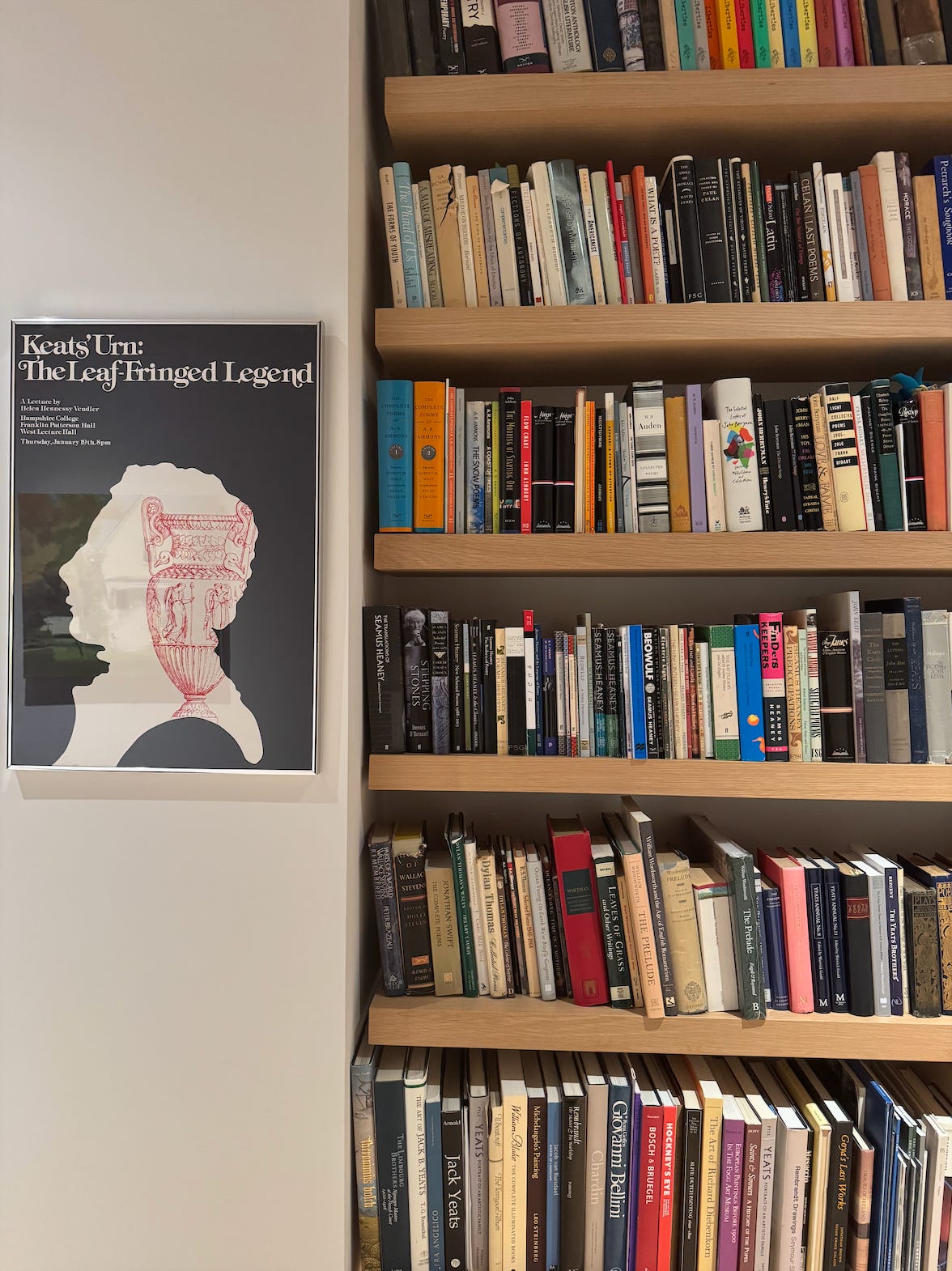
Majoring in the humanities. The CS major bubble has popped. Meanwhile, Ilya Strebulaev, a Stanford GSB professor known for his research on unicorn founders, posted an infographic of some of his research on LinkedIn, showing how Philosophy and Performing Arts majors have a greater probability of founding a unicorn than their Engineering and Economics counterparts. If the post-grad job market is going to be what it is (bad) no matter what, one might as well study what one actually loves. These days, being able to think about technology—rather than being able to create it—is the scarce resource. Reid Hoffman has a master’s in Philosophy. Just saying.
Turning towards conflict. We both took a course at Stanford called “Interpersonal Dynamics,” more commonly known as “Touchy Feely,” which is essentially a crash-course in building intimacy. Relationship health is defined not by how much people fight, but rather by how well people fight: how they turn towards each other when they most want to turn away, how they face the difficult moment together.
2025 was a challenging year, full of rancorous, corrosive conflict. But we can always make a different choice. And grace, empathy, and love are always there for you to choose.
If you have room for one more New Year’s resolution for 2026, let it be to, as Seamus Heaney wrote, “walk on air against your better judgment.”
Wait I’m absolutely obsessed i kept reading this and said yes louder each time
Well done ladies. Thoughtful piece.