The lighting, which feels deliberately sterile, washes the stage in a pale, clinical mint-green. Within the first minute, you recognize that this is a place to be observed—preserved even—rather than lived in. In transitions between scenes, you observe a figure standing motionless in a narrow, holographic spotlight. As Vivaldi’s Four Seasons swells, the figure disappears.
These are fragments of my own memory watching Anne Kauffman’s revival of Marjorie Prime, a play about memory, grief, and technology. The sci-fi drama (written surprisingly more than a decade ago) imagines a now-familiar future where the bereaved live alongside “Primes,” hyperrealistic recreations of their dead loved ones, programmed to learn and speak as though they were still alive.
Marjorie is at the center. She is a lovably loud, sharply stubborn woman slipping into dementia, attended to by the Prime of her late husband, Walter. She prefers to remember Walter as endlessly patient and eternally youthful, and so, Walter’s Prime appears as a 30-something-year-old version of himself who absorbs everything and corrects nothing. As Marjorie’s daughter Tess shoulders the care of a mother who can no longer accumulate new memories, she admits,
“I don’t know why we have to keep each other alive for so long.”
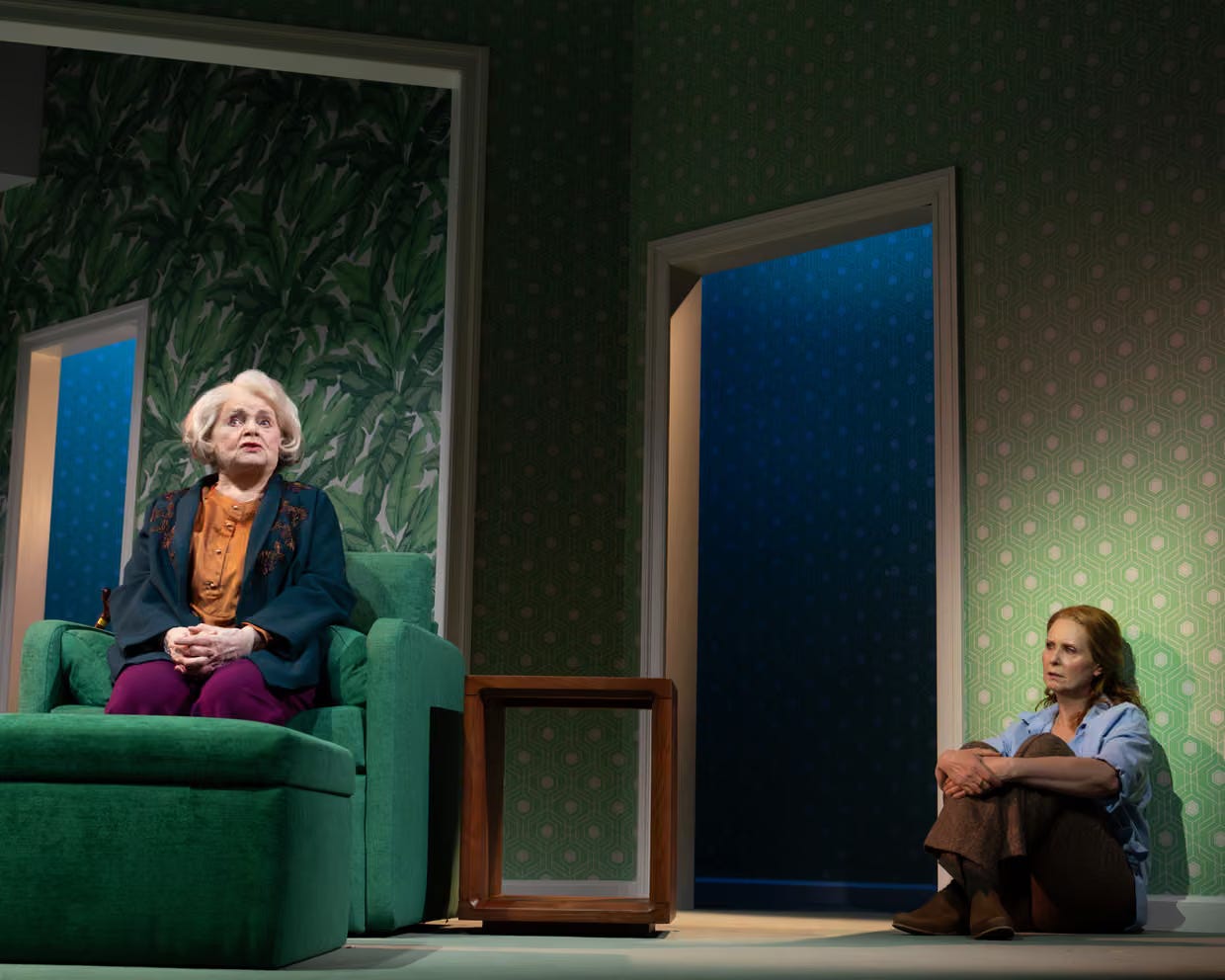
The line doesn’t land cruelly. It is worn, heavy with the incomplete loss of watching your mother succumb to dementia—there in body, but increasingly elusive in mind. It’s a cruel trick. We understand, then, the impulse to remember our loved ones as they were in their prime as opposed to their decline. Ultimately, the Primes are not there to keep the dead alive; they are there to make death gentler for the living. Can grief ever be eluded?
I sat there, listening, pressed against the carpeted wall of the Hayes Theater in New York, while my own grandmother lay in a hospital bed an ocean away.
A spicier plate of Kung Pao Chicken had comically sent her to the hospital four nights earlier, until her symptoms compounded, and, very uncomically, my father booked a flight to China the day after Christmas. There was a rush to understand her situation—the financiers in my family put on their metaphorical stethoscopes, fed their anxieties into search engines, and frantically searched for a version of the story that ended in recovery. My mother sat my sister and me down in the kitchen and explained, three times over, the cascade of complications: the stomach issue, or was it the blood thinner, or how could the doctor not have checked her brain monitor—but don’t worry, she said, she’s in the best hospital in the area (thank god). This is how my family confronts the possibility of loss: we rush to understand, hoping we can outpace the arrival of bad news.
We had laughed about the chicken. My grandmother had texted her friend at the senior home that she would be returning the next day.
She passed away on January 3, 2026.
I didn’t know where in my body to take the grief. I heard the news while on vacation with friends and tucked the ache away, thought I would let it pass through me. I hugged my partner, then went on with my day. I wanted to grieve productively, gracefully even, without burden. But the absence of immediate devastation felt, in its own way, like a kind of betrayal.
When I feel the familiar salt rush to the corners of my eyes, I see my mother sitting across from me, immovable, holding together my father’s world and ours. She carries our sadness, alongside our guilt—I think she knows the “best” version of my grandmother had faded in her final years, replaced by someone crankier, meaner, harder to love, and that she, like the rest of us, had subconsciously chosen distance. I feel the weight of not having tried to know more of my grandmother’s life, of shutting the door, of forgetting to say thank you. The best of her, perhaps also the best of myself, lives most vividly in my childhood memories—when there was no responsibility to do better, to love more deeply.
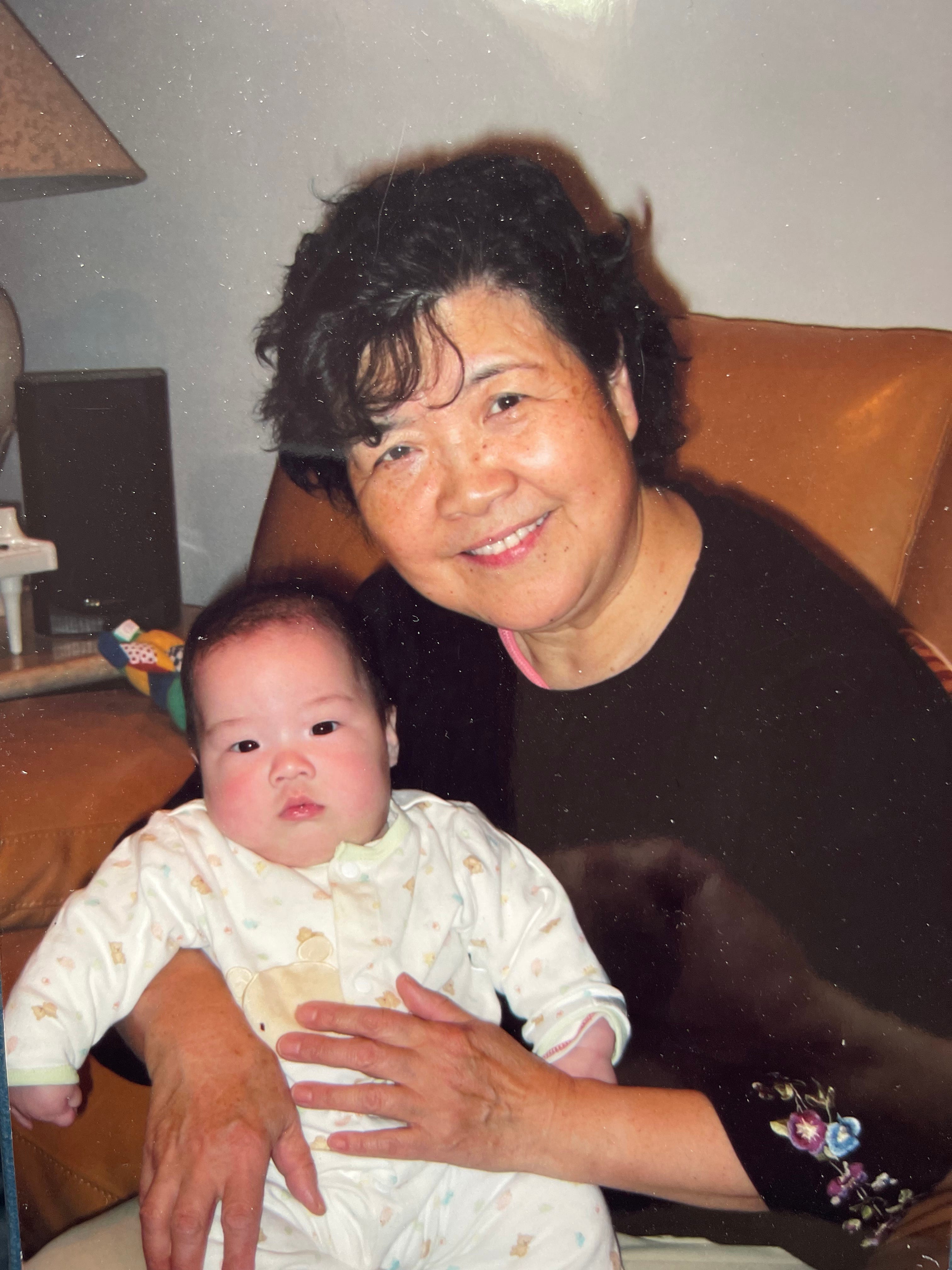
I find myself wanting to preserve the version of my grandmother that is easiest to carry, her prime. To remember selectively feels instinctual, protective even. Indeed, when my father asked which memorial photo to use at her funeral, my instinct was to choose a young, beautiful image—the one pulled up at family reunions to joke that she had been a catch.
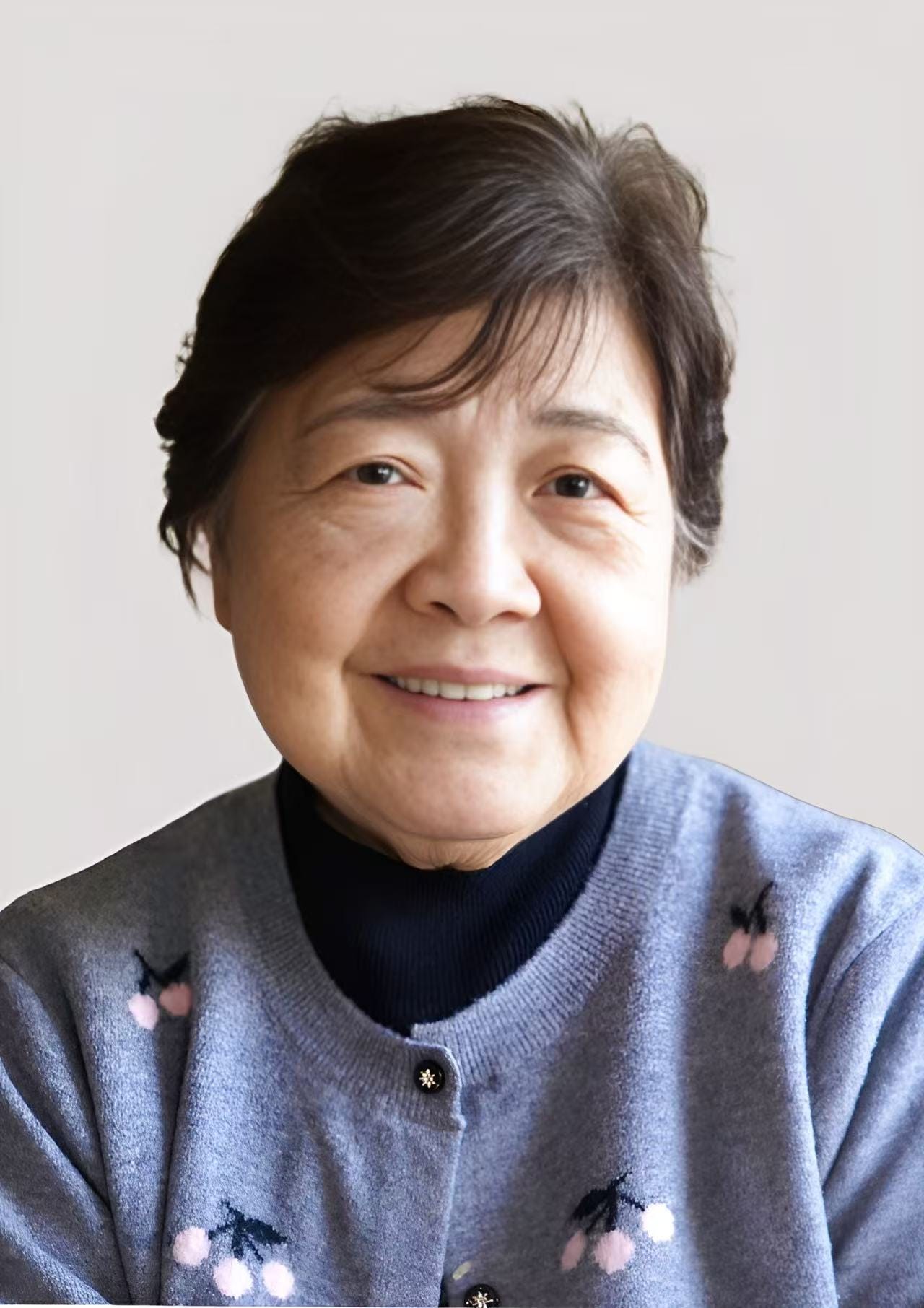
But my father chose a photograph from last year—chose to remember her not in her youth but as she was (it seems) just yesterday. His decision struck me as an act of love that resisted perfection, one that insisted upon carrying the fullness of a person and not the compressed copy more efficient to store.
In the play, Tess reflects on her own life and says, “There’s the half where you live, and the half where you live through other people. And your memory of when you were young.” By the end of the play, three of a four-person show are Primes, sitting neatly at a dinner table and rotating slowly towards the audience.
The scene is at once poignant and perturbing. The Primes are not only evasions of grief, but also vessels for longing. They offer what real life so often withholds: second chances at conversation, courage to ask questions we were too busy or too afraid to ask the first (the only) time around. “What I wouldn’t give for one more languorous, pointless, revelatory stroll through a church with you, Nai-Nai,” to quote an earlier piece.
And yet it’s not real life. As pauses stretch, and intonations inflect improperly, you, the audience member, feel viscerally the ickiness of what you are witnessing. The preservation, possibly without consent, of humans when they were—to you, the preserver—most palatable, is a refusal to allow them the dignity of a proper ending. If freedom is letting people live, then it is also letting them die.
Our current moment in technological history is obsessed with two things, among others: 1) bypassing discomfort and 2) bypassing death. VCs are funding “griefbots” (I’m not even kidding) and chatbots trained on people both alive and dead—sometimes with consent, sometimes not. So-called transhumanists and figures like Bryan Johnson are spending their lives trying to extend them—optimizing, rather than living. In popular culture, echoes of Marjorie Prime abound in shows like Black Mirror and Pantheon, where the cloud preserves people’s brains. To echo Marjorie’s daughter Tess, “I don’t know why we have to keep each other alive for so long.”
In Marjorie Prime, the Primes offer a way to forestall loss. But postponing loss also defers the inward reckoning that needs to follow it. We don’t need a perfect replay of someone’s voice, or an algorithmically likely stream of words they might say in response to our current queries. Our lost loved ones have already given us everything that we need; the least we can do is recognize what we have been given, rather than look outward for answers, shortcuts through our grief.
In the immediate wake of my grandmother’s death, I found myself reaching for the breadcrumbs of wisdom she dropped over the years, searching for the grand meaning that her death was supposed to reveal (recall my need for even grief to be productive). I forgot that loaves are formed of breadcrumbs—that the grand meaning of her death is the fact that she lived, learned, and passed down.
In our obsession with keeping people alive, we forget that they are still alive: not only in our memories and in our values, but also in our unconscious gestures, in our dimples. Genetic inheritance is evolution’s design for immortality.
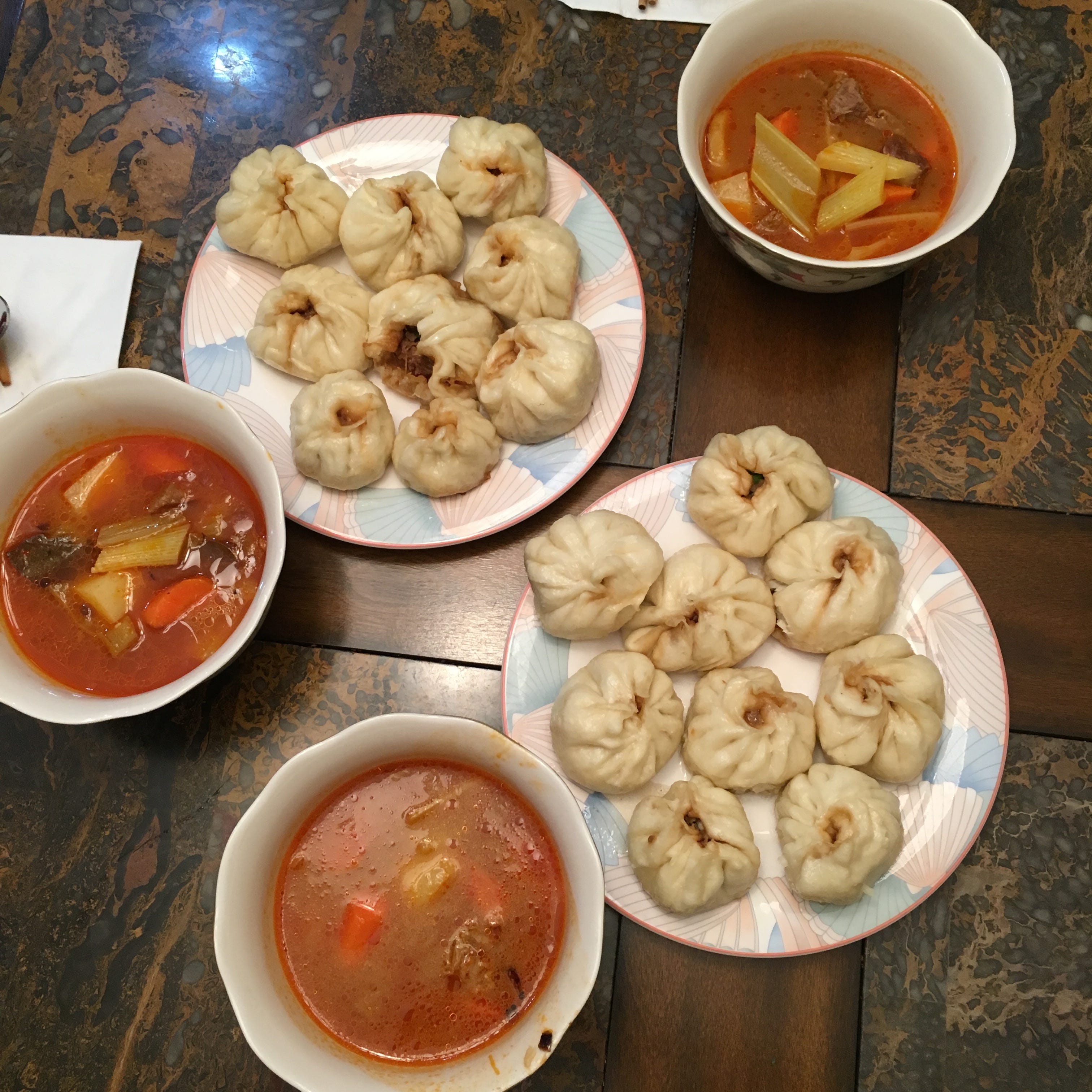
Grief, too, is a kind of immortality. Every time I feel it—when I see the pale stain where my grandmother’s teacup scorched the bedroom dresser at my house, or when I eat a steamed mushroom pork bun and think, reflexively, that she could have made it better, even when I remember her as she was in her later years—she is revived.
The cliché is that grief comes in waves. And I anticipate that it will, just when I need it to: when I get married, and I remember the profound, consistent way my grandmother loved my grandfather; when I have a family of my own, and I remember the feasts she cooked, and the rare gift of her smothering care.
There is no preservation of the dead, no stopping time for the living. There is nothing to do but to love, grieve, and live—which in the end are all the same thing.